
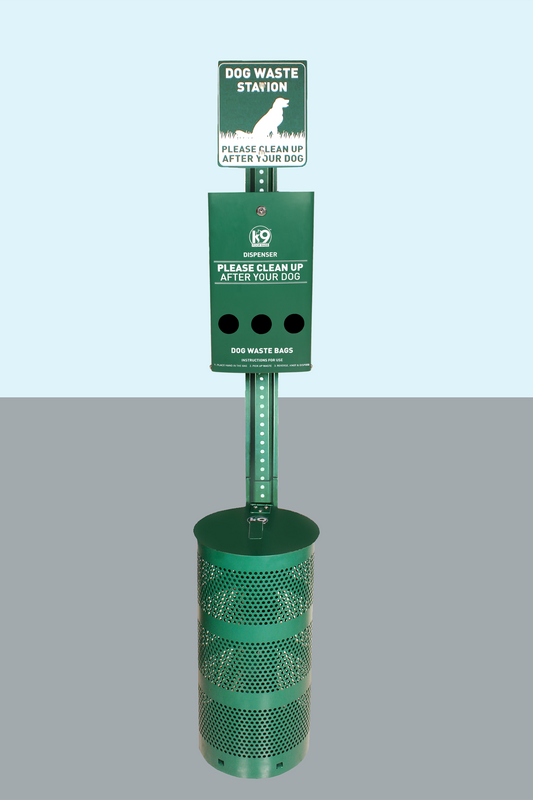
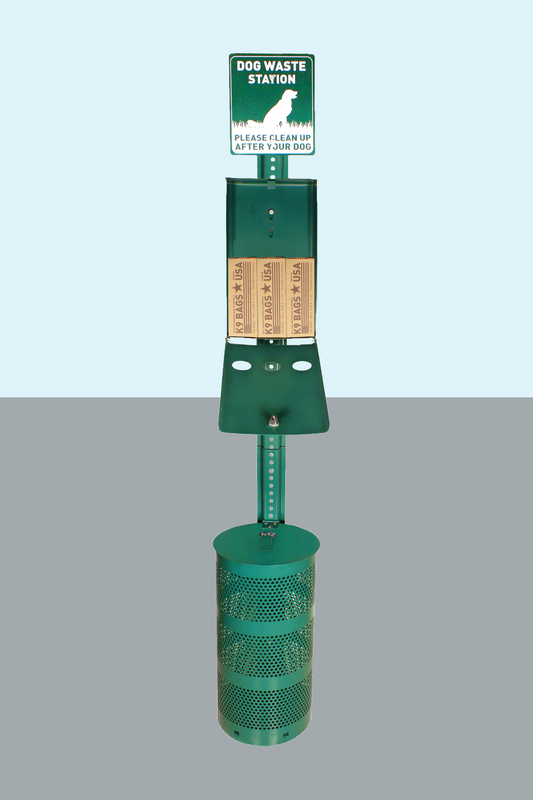
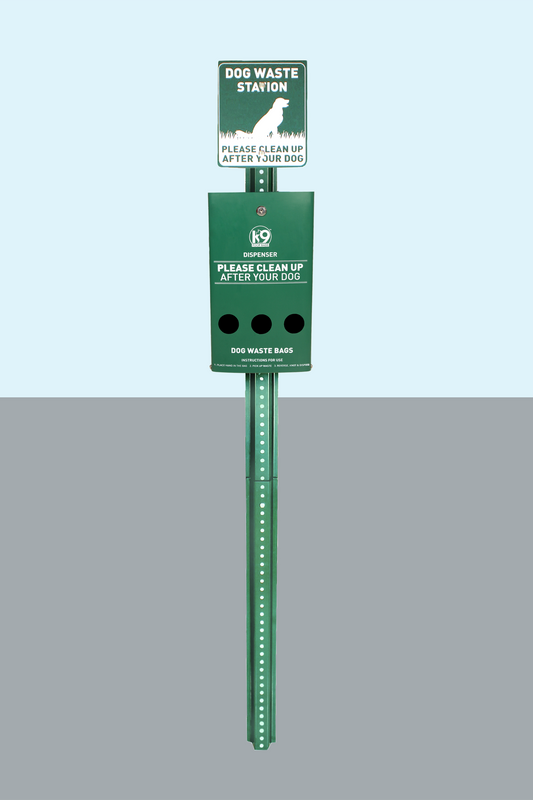
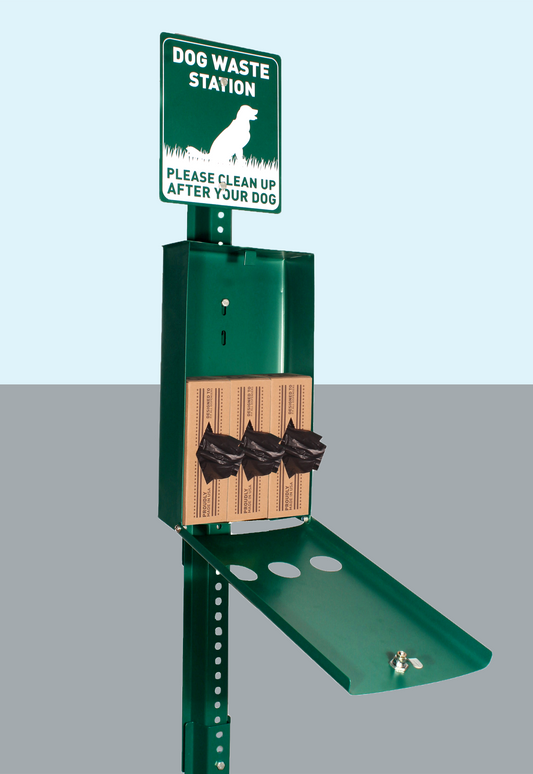
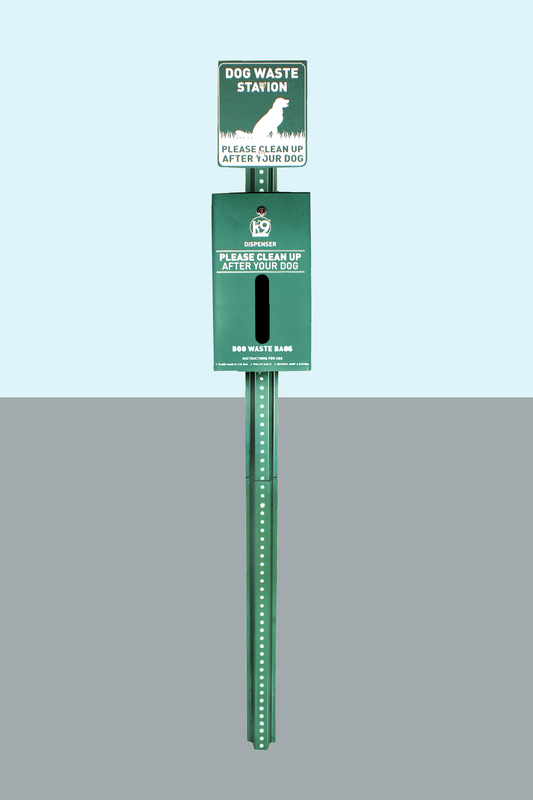
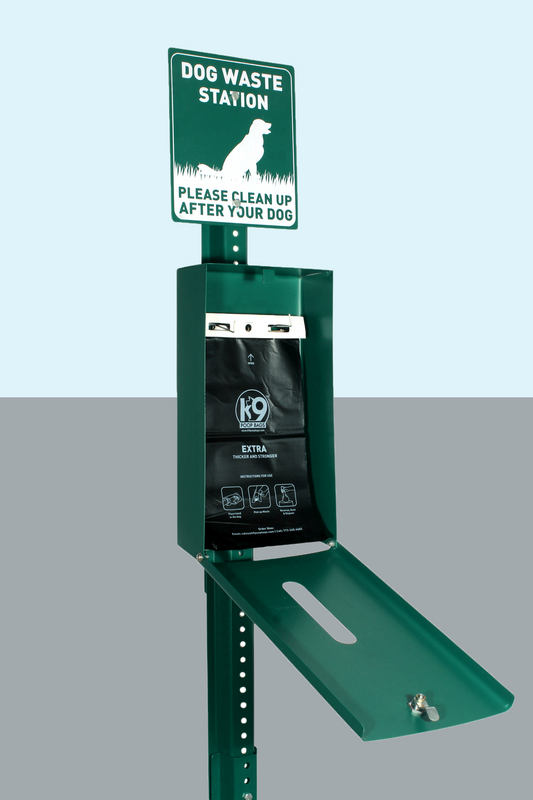
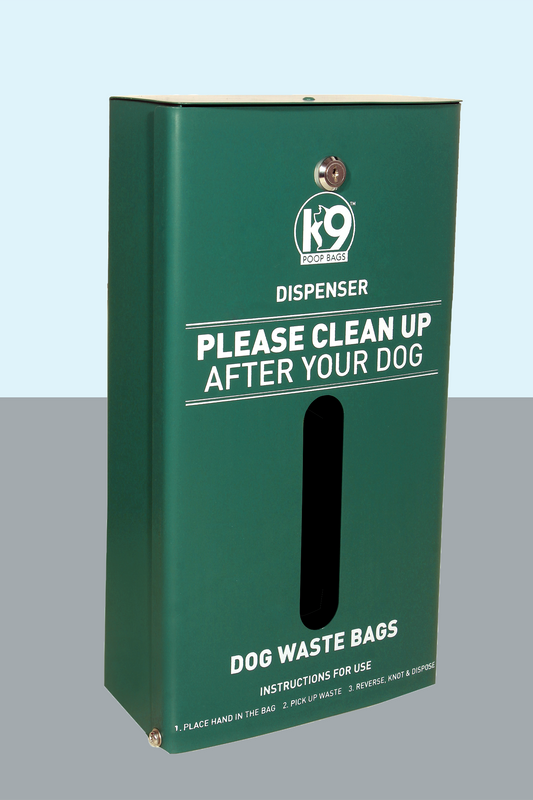
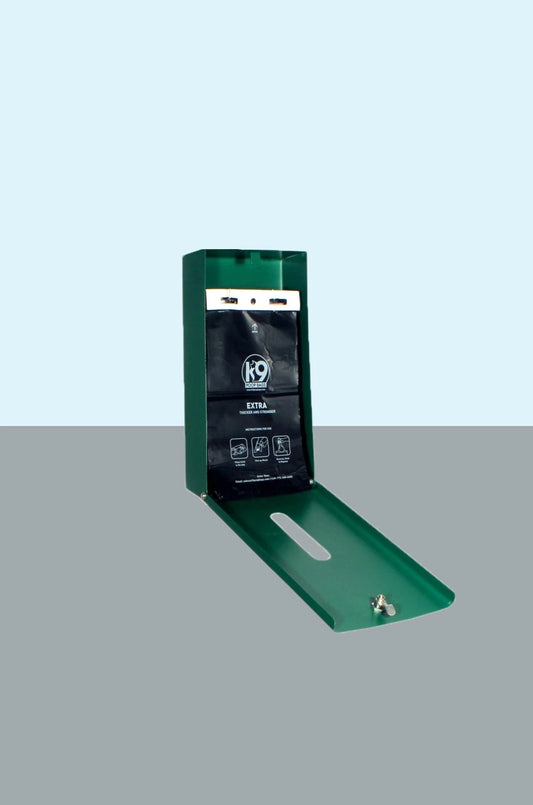
Roll bags: best value per bag.
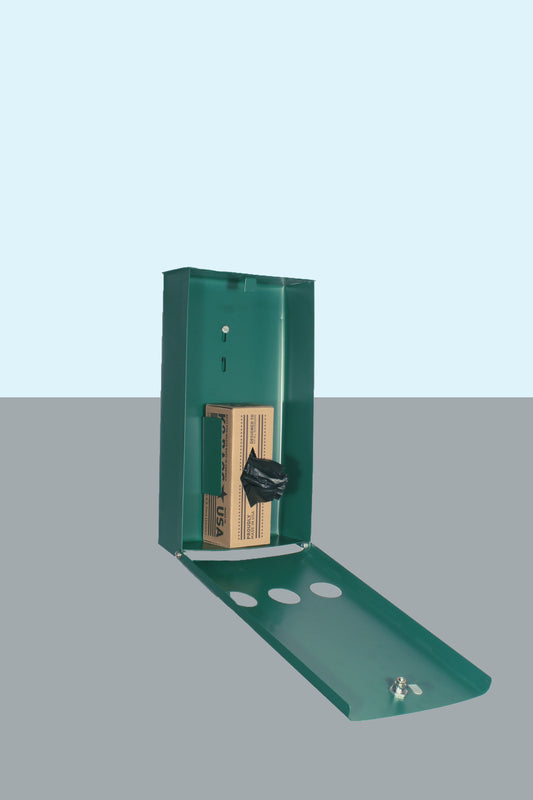
Roll refills keep the cost per bag lowest. The dispenser protects the roll inside, but users can pull more than one bag at a time. Best when refill economy matters more than strict dispensing control.
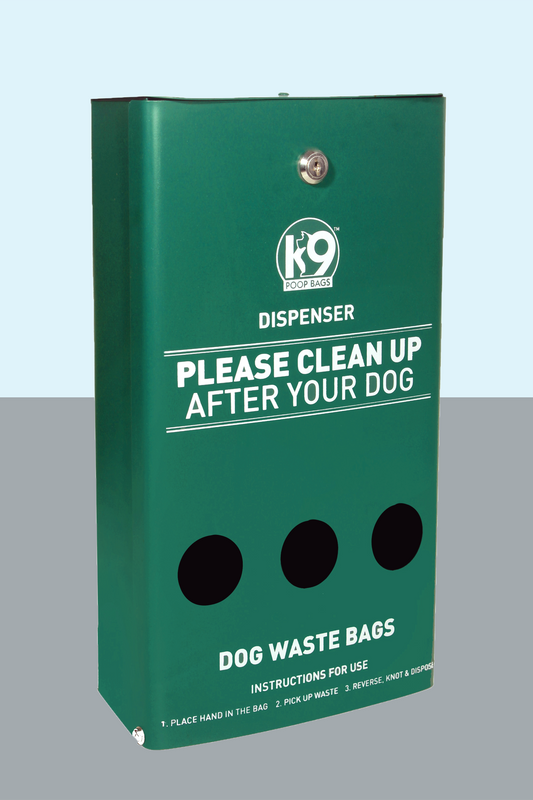

Two finishes, applied in that order, for the same reason you'd prime before you paint. Rust has to get through both before it ever meets steel.

Clean, consistent welds keep the dog waste station square through slammed lids, mower bumps, and ordinary public use. The sign stays visible, the dispenser stays usable, and the can stays where it belongs.

Everything lines up, the hardware's in the box, and assembly stays uneventful. Standard post mounting keeps a future dispenser swap from turning into a new station purchase.
Station setups
Roll and header dispensers trade cost per bag against dispensing control. Whether there is already a trash can nearby settles the rest.
Roll refills keep the cost per bag lowest. The dispenser protects the roll inside, but users can pull more than one bag at a time. Best when refill economy matters more than strict dispensing control.
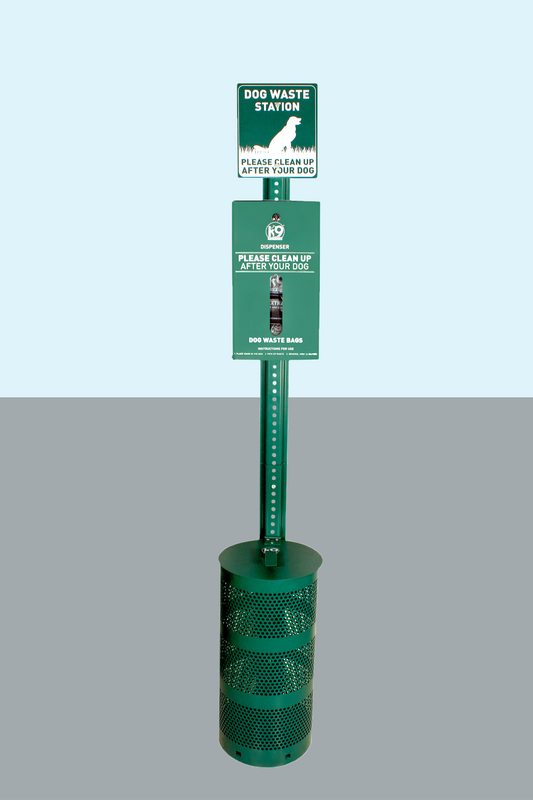
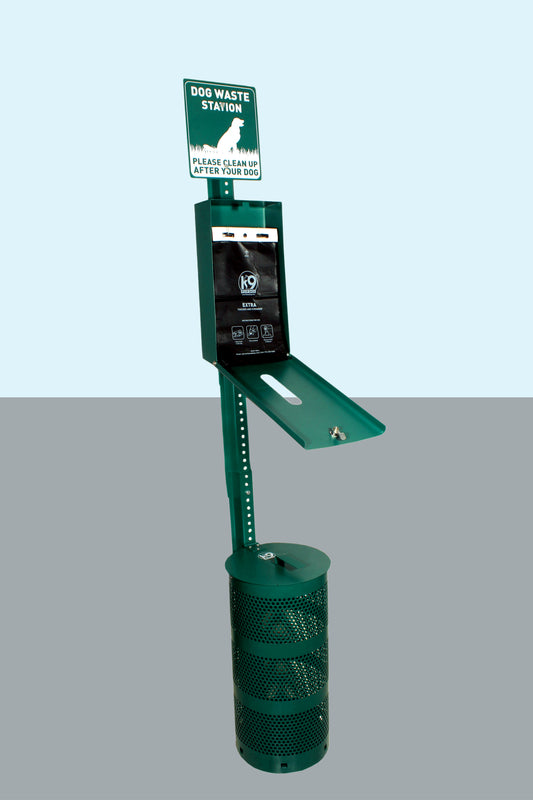
Each bag pulls individually from a punched header card. Header refills cost more per bag, but the one-at-a-time format discourages handful grabbing and gives you tighter control over public use.
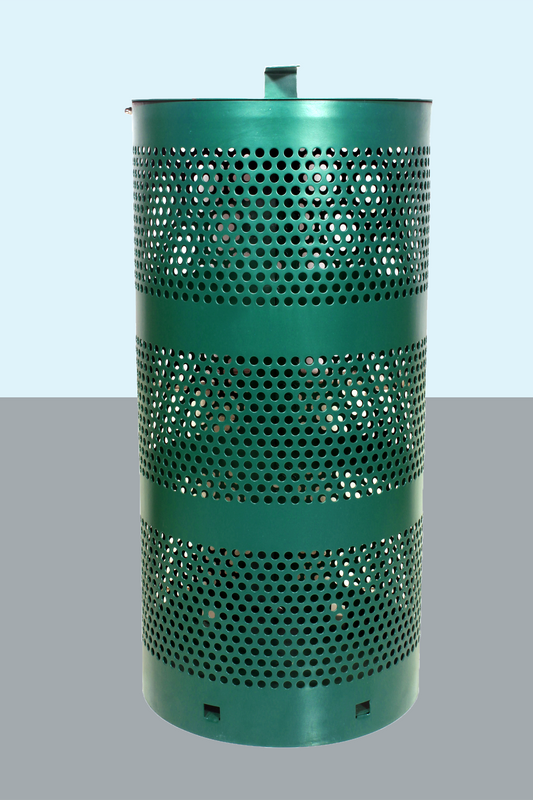
If there is no nearby place to dispose of a used bag, choose the full dog waste station with its own lidded 13-gallon can. If a public trash can is already close by, a mini station adds bags and a sign without adding another can to service.

Every nut and bolt for the dog waste station is in the box. One person, one morning, no second trip to the hardware store.

A dog waste station lives in rain, sun, mower bumps, and whatever the public invents next. That is why ours starts with galvanized, powder-coated steel.

Each dog waste bag dispenser keeps the refill supply behind a locked door. Every dispenser uses the same key, and we include two with each because one will inevitably get lost.

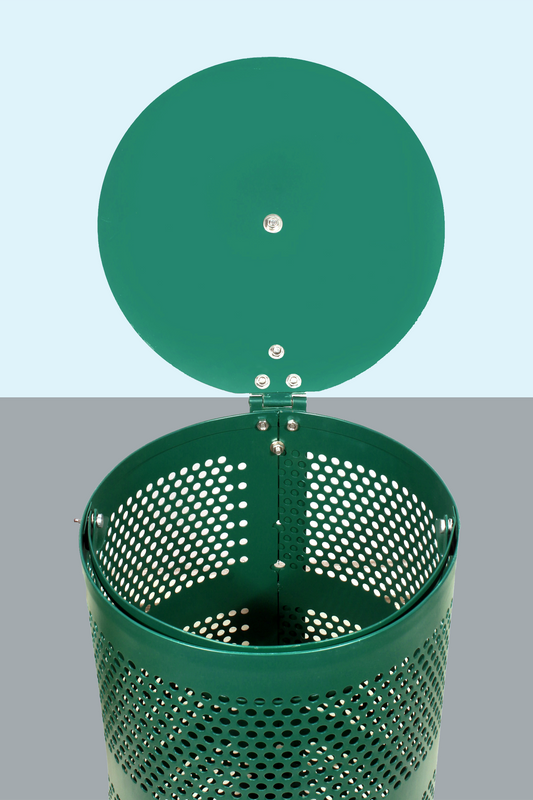
Without a secure hold at the rim, a 13-gallon liner collapses into the pet waste station can and turns a routine change into a fishing expedition. Built-in clamps keep it where it belongs.

Pet waste station cans, signs, dispensers, locks, and keys are sold separately. Replace what failed and keep the rest of the setup in service.
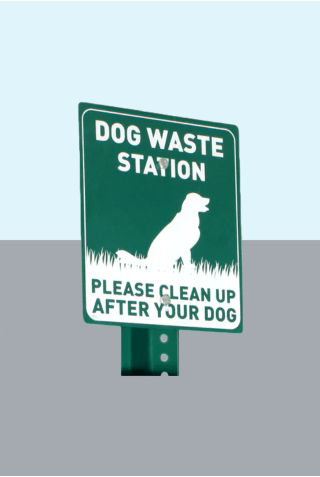
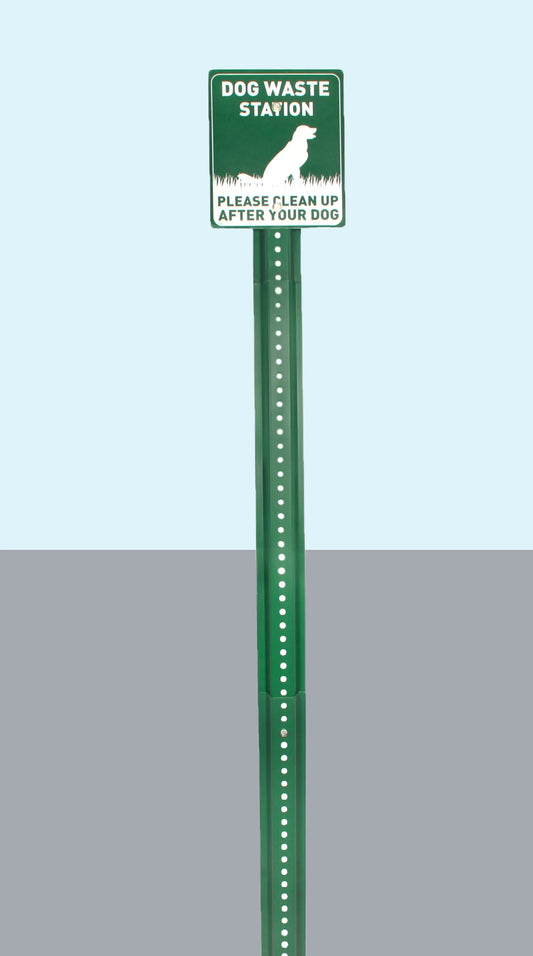
A full dog waste station includes the sign, keyed bag dispenser, mounting post, lidded 13-gallon can, installation hardware, and two keys. Choose either a Roll Bag or Hanging Header Bag dispenser to match the refill format you plan to stock.
The can.
A full station includes its own lidded 13-gallon can. A mini station keeps the sign, dispenser, and post but leaves out the can. Choose the full setup when the location needs a disposal point. Choose the mini when a suitable trash can is already nearby.
Choose between lower cost per bag and tighter dispensing control. Roll Bags offer our best value per bag. Hanging Header Bags cost more but pull away individually, which can make usage more predictable.
If you are replacing an existing pet waste station, matching the format already installed is usually the simplest answer.
The steel station components are galvanized and then powder-coated for outdoor use. Pet waste stations spend their working lives in rain, sun, mower traffic, and whatever the public thinks of next. The finish is there for all of it.
The station arrives in parts. The post sections bolt together, and the sign, dispenser, and can mount to the post with the included hardware. Basic hand tools handle the assembly.
Concrete is recommended for the in-ground installation, and buried utilities should be located before anyone starts digging.
There is no useful one-station-per-X-units rule. Start with the places where dog traffic converges: property entrances, dog areas, path intersections, open lawns, and the walk back to the parking lot.
A station should be easy to notice before the owner needs it. If using it requires a detour, it is in the wrong place.
The full station uses a lidded 13-gallon can. Pair it with a 13-gallon Can Liner sized to fold over the rim. Built-in clamps keep the liner from sliding into the can during service, which is a small detail right up until it is missing.
Yes. Those parts are sold individually, so one damaged or missing component does not require another full-station purchase. If you are fitting a Dog Bags USA part to another brand's post, compare the mounting points before ordering.